2025
Melo
Product / UI design / UX collaboration
Lead Designer
Melo is a mobile platform that allows users to request favors or services and connect with people nearby who are willing to help. Melo’s role is to facilitate the connection between both parties by charging for the match, while the agreement, communication, and any transaction take place outside the platform.
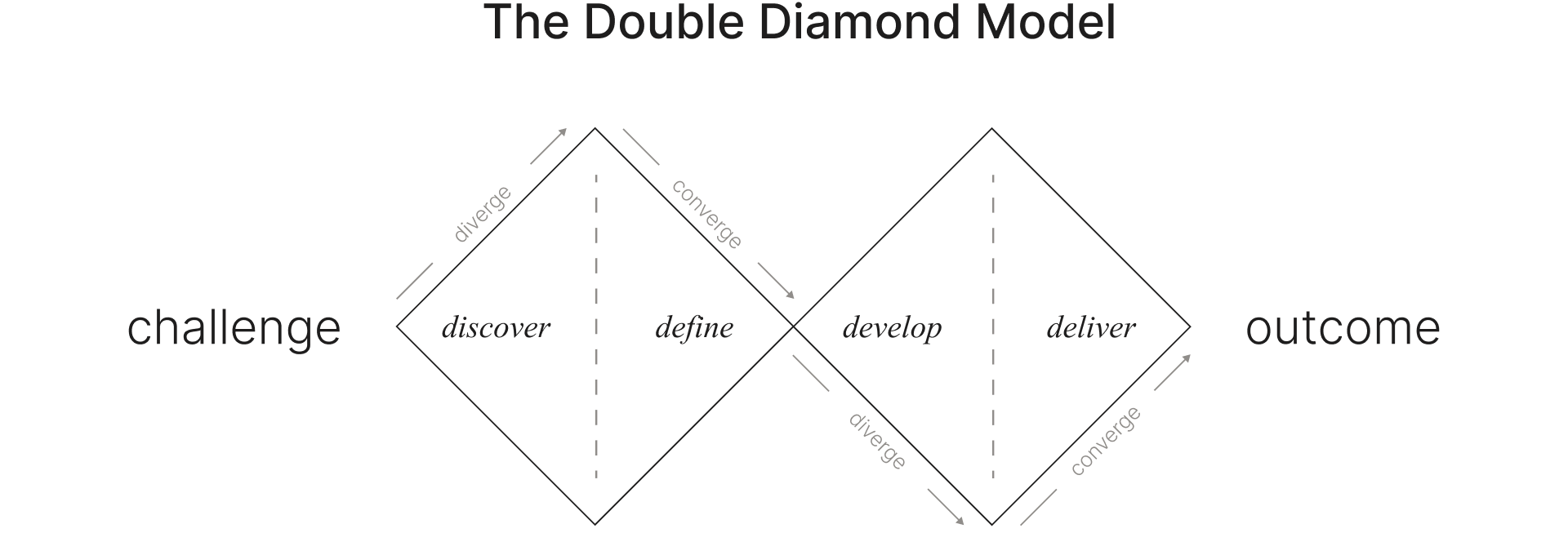
The project was developed following the Double Diamond framework, with a strong focus on UX/UI design and service thinking to ensure clarity, trust, and feasibility.
Design a trustworthy, friendly, and intuitive mobile experience that clearly communicates the role and limits of the platform, helping users feel confident when requesting or accepting favors.
UX research, service design, UX/UI design, visual and brand identity definition, logo creation, character design and illustration, and close collaboration with development.
Since Melo had not launched yet, the project focused on qualitative research and early validation, rather than quantitative performance data.
• Understand how users perceive asking for help and connecting with others through a third-party platform
• Identify emotional, trust, and clarity barriers
• Validate whether the service concept felt viable and understandable
• 8 qualitative user interviews with potential users
• Early concept testing conversations
• Review of analogous peer-to-peer services

These inputs helped shape the experience, service logic, and brand tone before any scaling decisions.
This project followed a Double Diamond structure, ensuring that exploration and synthesis preceded design execution.
Discover
Understand users, context, and perceptions
Define
Synthesize insights into a clear problem and experience principles
Develop
Design UX/UI, brand identity, and characters
Deliver
Document a cohesive product and visual system
Understand how users feel about requesting and accepting favors through a third-party platform, and where hesitation or friction appears.
• User interviews
• Journey mapping
• Ecosystem and stakeholder mapping
• Early flow exploration
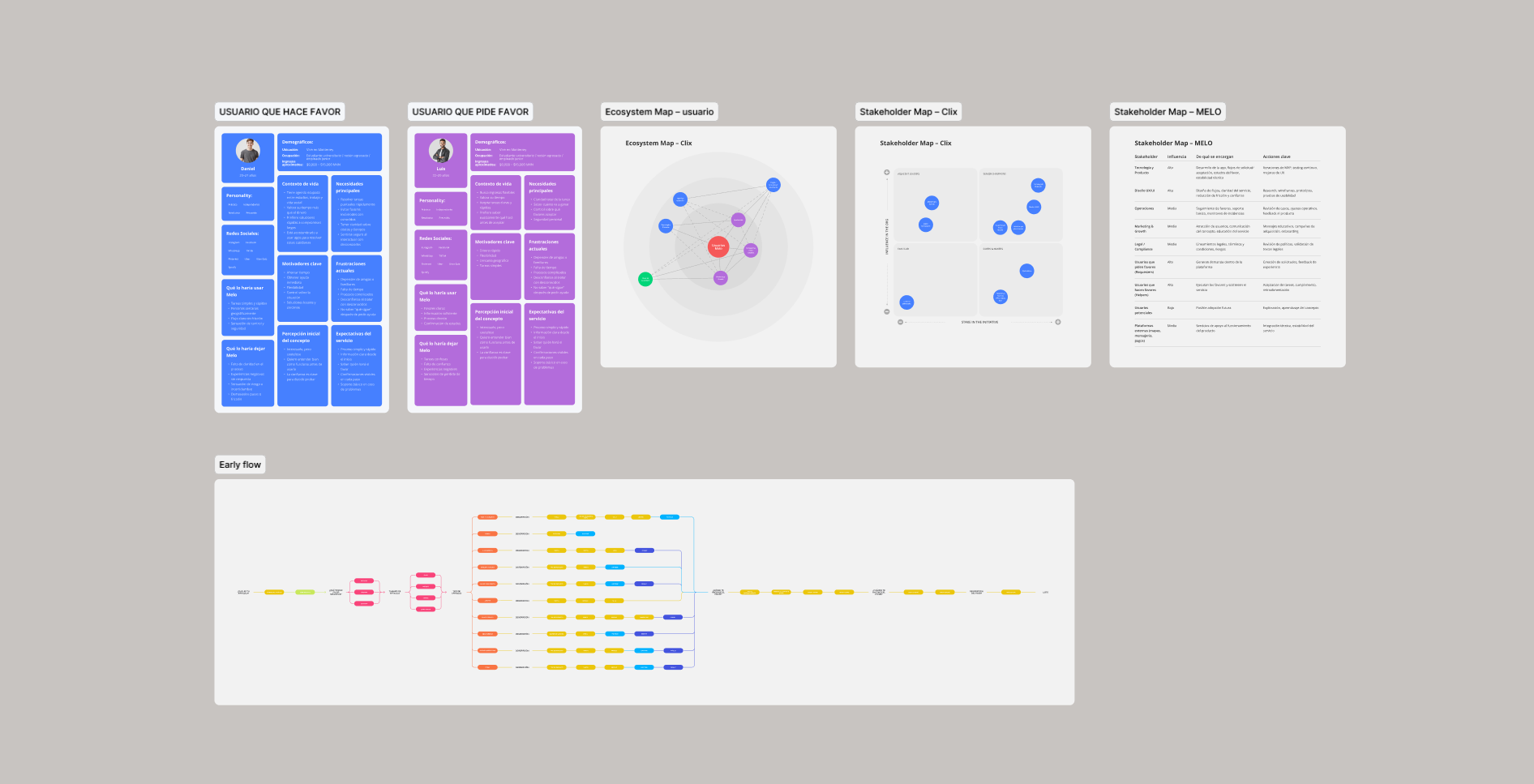
Overview of the qualitative research tools used to explore user needs, emotions, trust, and early service assumptions.
• Users hesitate before making their first request
• Trust and role clarity are more important than speed
• The service needed to feel human, not transactional
Translate research insights into a focused problem definition and clear experience principles.
• Affinity Mapping
• How Might We questions
• Problem Statement
• Design Challenges

Overview of the tools used during the Define phase to synthesize research insights and frame the core problem.
Melo needs to help users feel confident and comfortable requesting and accepting favors by improving clarity, trust, and emotional approachability throughout the service experience.
Explore and structure the service, experience, and brand before launch, focusing on clarity, trust, and feasibility without adding unnecessary complexity.
• UX flow analysis
• Wireframes
• Brand exploration and mood definition
• Character design exploration
• High-Fidelity Prototype
• Usability Testing (Prototype-based)
• Design Iterations Based on Testing
• Design System Foundations
• Visual & Brand Direction
Early wireframes and flow analysis were used to structure the service, map key decision points, and identify friction and trust-related pain points across the experience.


A high-fidelity prototype was created and tested with users to validate clarity, trust, and the overall flow of requesting and accepting favors before finalizing the experience.


Visual exploration and brand direction were developed alongside UI iterations to create a friendly, human experience, refining flows and screens based on testing insights.


• Small frictions early in the flow had a large impact on user confidence and completion.
• Drop-offs were closely tied to unclear steps, expectations, and validation rules.
• Clear states, feedback, and tone significantly improved perceived trust and comfort.
Deliver a complete, coherent product experience ready for launch and iteration.
• UX/UI flows
• High-fidelity UI screensInterface documentation
• Logo and brand identity
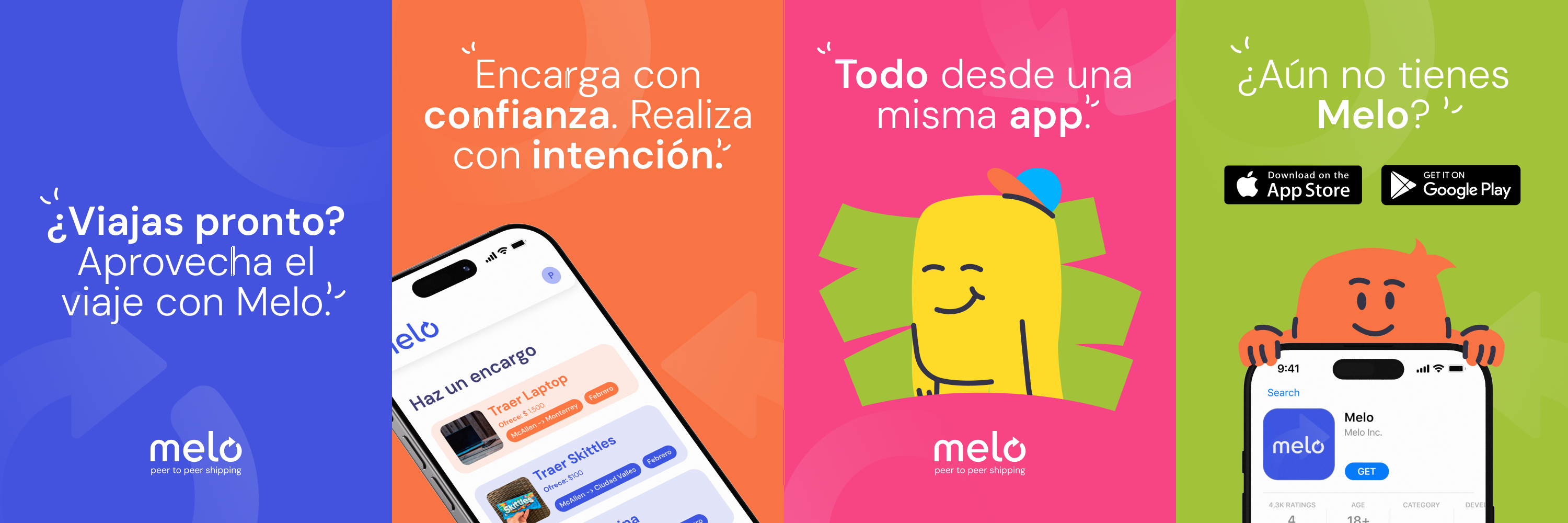
• Character system and visual language

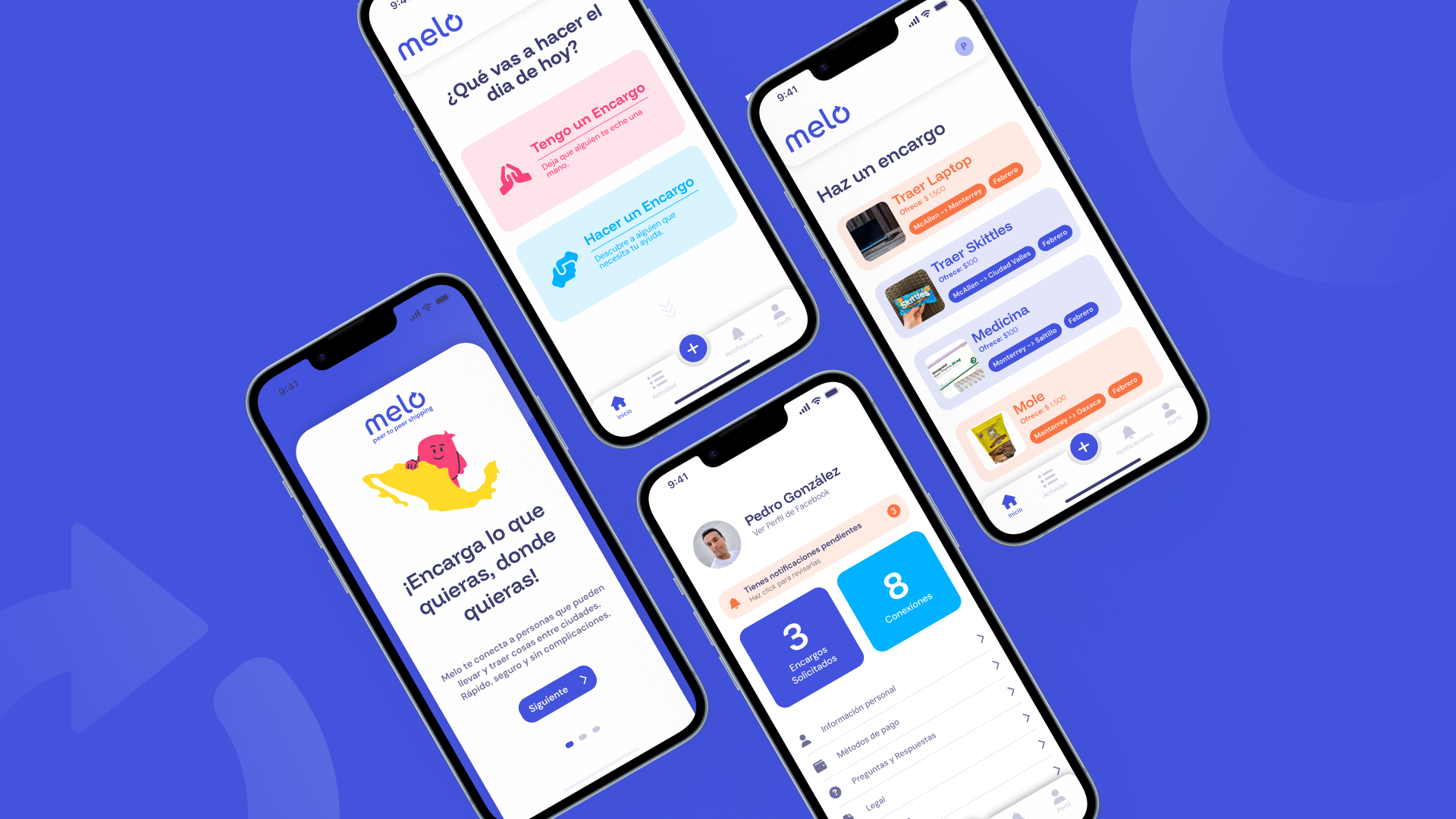
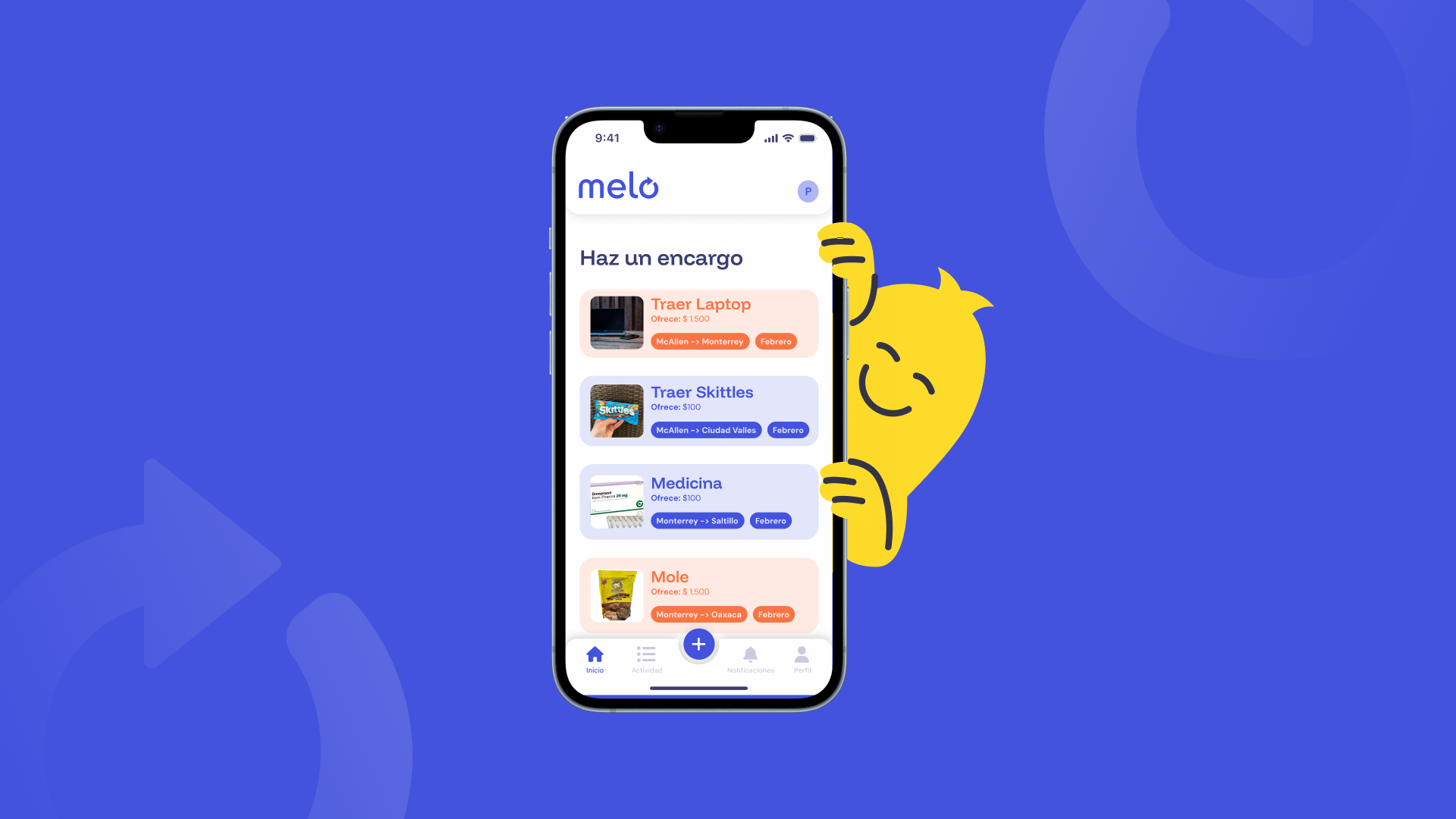
Final high-fidelity screens showing the complete mobile experience, focused on clarity, trust, and a friendly tone across key moments of the service.

Reusable UI components created to ensure consistency, clarity, and scalability across the product experience.

Design system foundations defining typography, color, components, and interaction patterns to support future development and iteration.
• Fully designed mobile product experience
• Consistent brand and visual language
• Characters meaningfully integrated into the experience
• Clear foundation for future development and scaling
• Emotional confidence is a prerequisite for action, especially in peer-to-peer services
• Users prioritize clarity and understanding before committing, not incentives
• Brand tone plays a critical role in building trust between strangers
At this stage:
• No live usage data was available
• Conversion and retention metrics were not yet tracked
• Key assumptions were documented rather than estimated
These gaps were treated as future validation points, not ignored.
This project helped establish a clear product, service, and brand foundation for Melo before entering the market, reducing risk and aligning experience, service logic, and visual identity from day one.
• Early UX decisions play a critical role in building long-term trust
• Brand and service design are inseparable in peer-to-peer experiences
• Clarity builds confidence more effectively than feature complexity