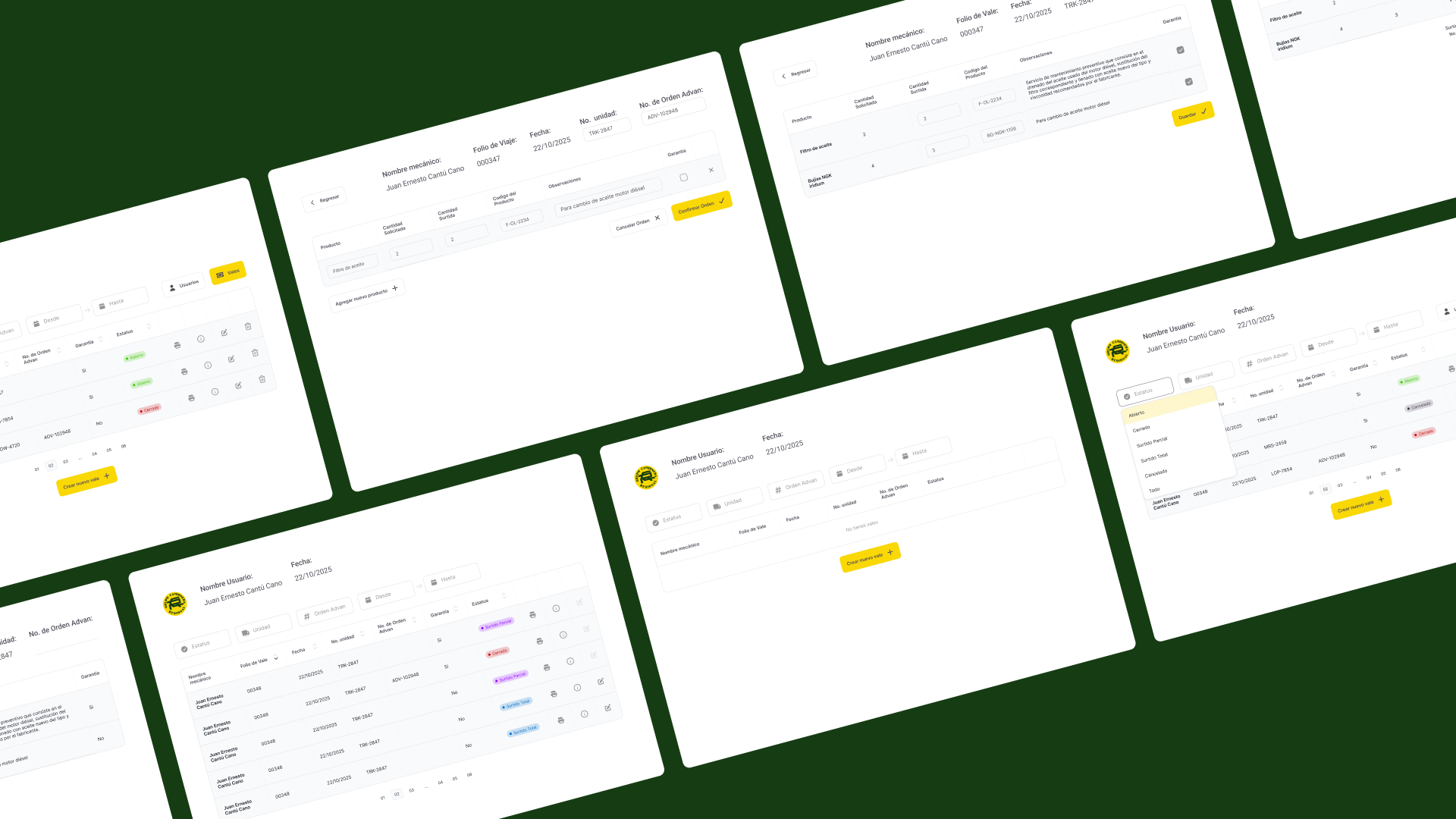
2025
Grupo Camionera Regional
Internal system / UX/UI design / Service design
Lead UX/UI & Service Designer

Grupo Camionera Regional operates through multiple internal teams that rely on vouchers to manage parts, repairs, and operational requests. The existing process was fragmented and prone to errors, making it difficult to track voucher status, responsibilities, and inventory usage.
This project focused on designing a centralized internal system that supports the full voucher lifecycle through clear workflows, role-based access, and validation rules. The solution improved visibility across teams, reduced operational errors, and established a scalable foundation for long-term control and reporting.
Design a centralized internal system to manage the full voucher lifecycle, improving operational control, accuracy, and traceability across teams while enabling future scalability.
Led the UX/UI and service design process, defining workflows, user roles, and system logic. Designed validation rules, status models, and role-based experiences to translate operational requirements into a clear, scalable internal system.
Despite being a core operational process, voucher management at Grupo Camionera Regional relied on fragmented workflows with limited visibility and control.
• Lack of a centralized system to track voucher status end-to-end
• Manual validations for quantities, codes, and guarantees
• Unclear ownership across workshop, warehouse, and administrative roles
• High risk of errors during partial and total supply processes
The challenge was not creating vouchers, but ensuring they could be accurately tracked, validated, and closed across multiple teams without friction or data inconsistencies.
This project focused on defining how the voucher system needed to function across teams before designing the interfaces. Due to scope and timing constraints, the priority was not exploratory research, but creating a clear, reliable, and implementable operational system.
The process centered on mapping end-to-end voucher flows, defining role-based responsibilities, and establishing system rules such as statuses, validations, and permissions. These foundations guided the design of the core screens required for daily operations.
Voucher Flow Definition
Translating defined requirements into end-to-end voucher flows
Status Logic & Error Prevention
Structuring system logic, statuses, and validations
Operational UI Design
Designing screens to support agreed operational scenarios
Clear and Traceable System Design
Ensuring clarity, control, and traceability within the defined scope
Double Diamond, Service Design, UX Research & Analysis, Figma, Journey Mapping & Service Blueprinting, Internal product and operational data.
The voucher flow was designed as a structured, end-to-end lifecycle that defines how vouchers are created, processed, validated, and closed across teams. Each stage establishes clear ownership, available actions, and system rules to ensure operational consistency.
The flow accounts for real operational scenarios such as partial supplies, validation of quantities and codes, guarantees, and controlled cancellations, ensuring that vouchers remain traceable from creation to final closure.
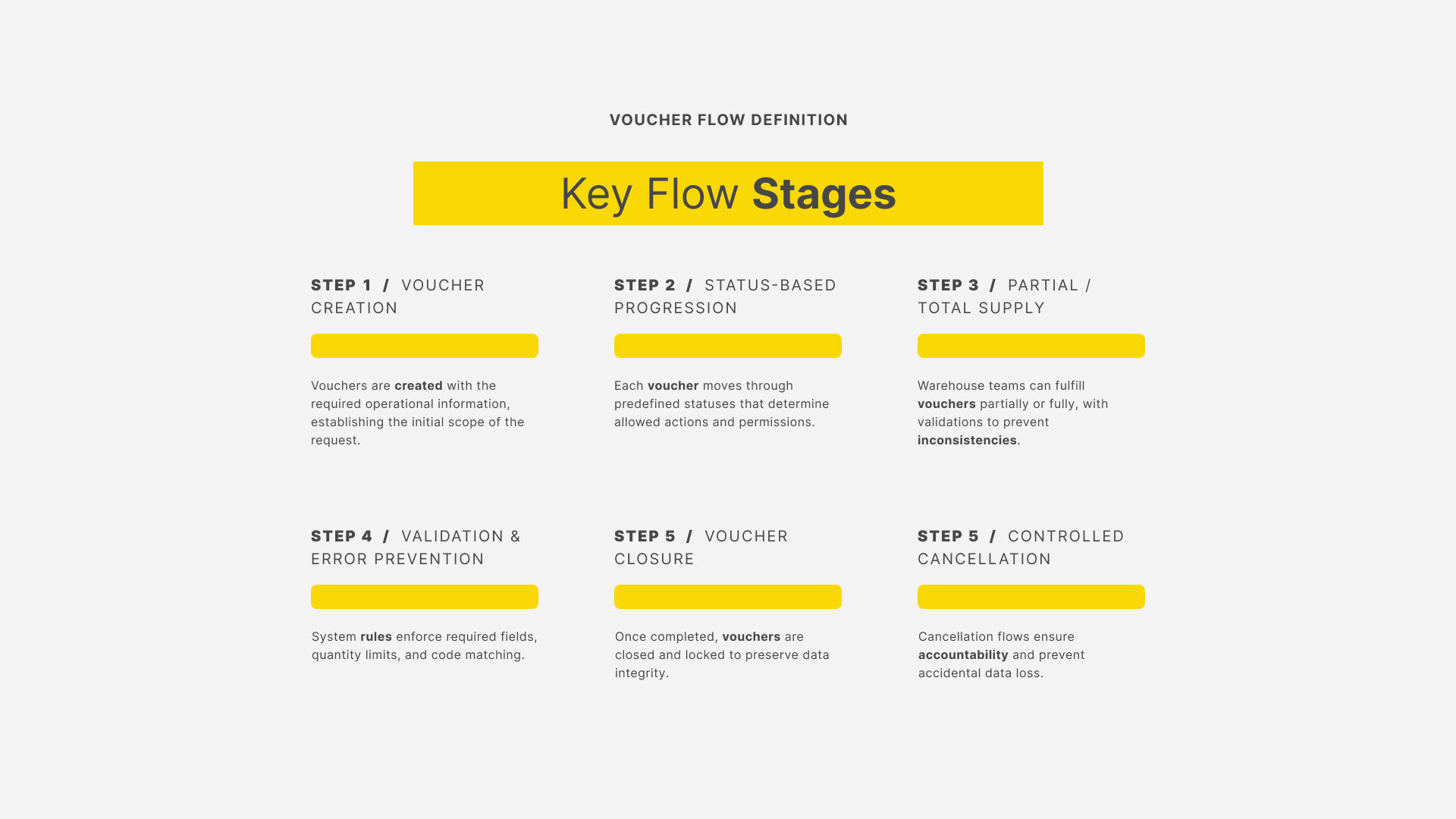

Overview of the complete voucher lifecycle, defining how vouchers move across teams from creation to closure through structured statuses and role-based actions.

Detailed view of a critical operational scenario, illustrating how partial supply flows are handled through validations, status changes, and role-specific responsibilities.
• Status-driven actions and permissions
• Clear ownership at every stage
• Error prevention through validation
• Full traceability across the voucher lifecycle
To reduce operational errors and ensure consistency across teams, the system was designed around a status-driven logic model. Each voucher status determines what actions are available, which roles can interact with the voucher, and what validations must be met before progressing.
Rather than relying on manual checks, the system enforces rules that prevent invalid actions, incomplete data, and incorrect state transitions, ensuring operational reliability.
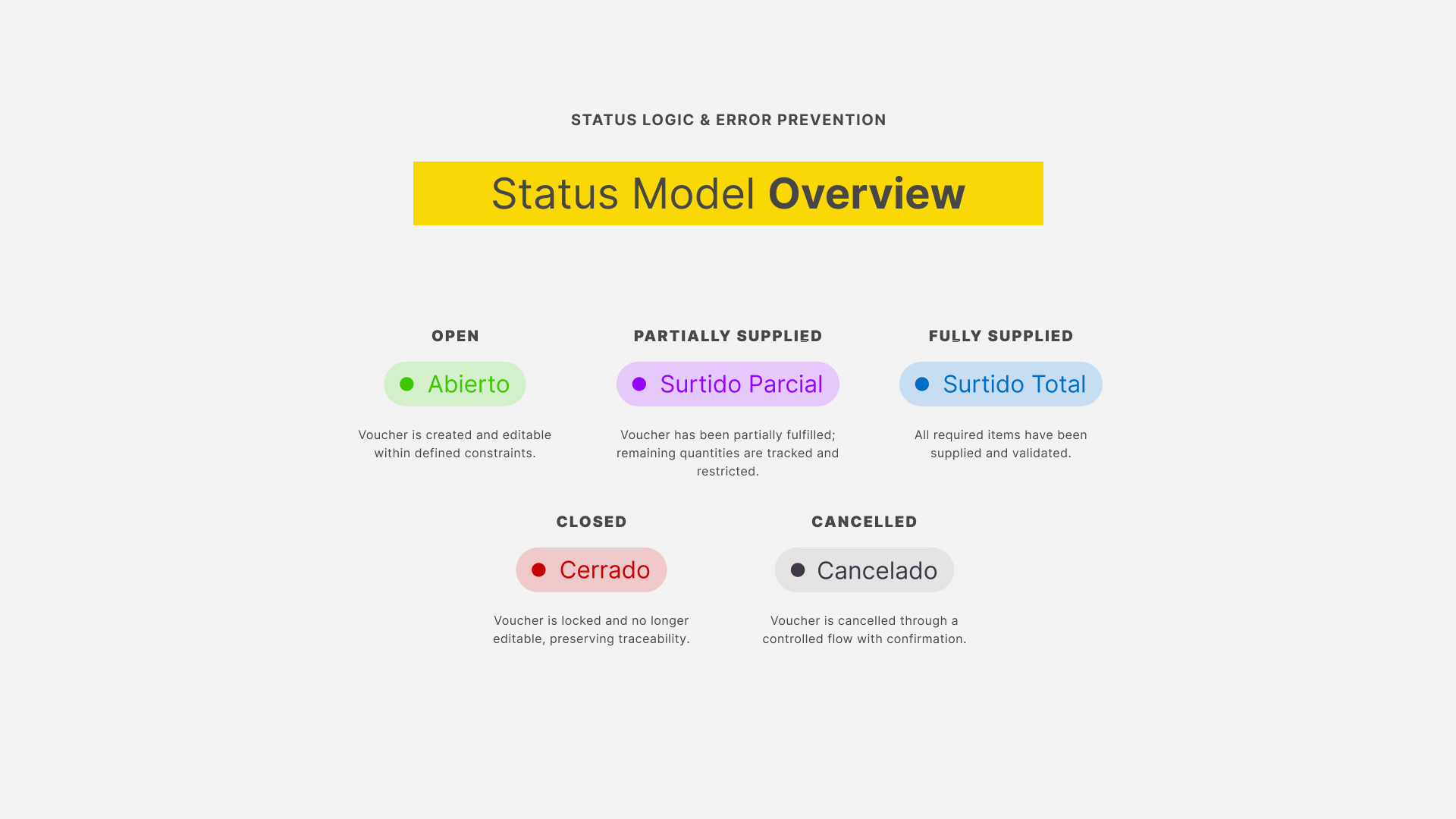

Status model defining allowed transitions and system behavior at each stage of the voucher lifecycle.

Example of status-based restrictions preventing invalid actions and enforcing correct system behavior.
• Status-based action restrictions
• Mandatory field validations
• Quantity and code consistency checks
• Confirmation modals for critical actions
• Locked states to prevent accidental edits
The system was designed around clearly defined role-based flows to ensure accountability and reduce cross-team friction. Each role interacts with the voucher system through a tailored set of actions, permissions, and responsibilities aligned with their operational function.
Rather than exposing the same interface to all users, flows were structured to reflect how each team participates in the voucher lifecycle, ensuring clarity, control, and efficiency at every stage.
• Workshop (Taller)
Initiates voucher requests and tracks fulfillment progress.
• Warehouse (Almacén)
Supplies items partially or fully, validates quantities and codes, and updates voucher status.
• Data Entry (Capturista)
Registers and standardizes voucher information, supports operational logging, and ensures required data is complete and consistent before vouchers progress.
• Administrative Roles
Oversee voucher control, validation, closure, cancellations, and system governance.

Role-based flow overview showing how Workshop, Warehouse, Data Entry, and Admin interact with vouchers throughout the lifecycle.

Detailed view of a role-specific flow, highlighting permissions, responsibilities, and handoffs between teams.
• Clear ownership per role
• Restricted actions based on permissions
• Reduced dependency on manual coordination
• Shared visibility through status-driven updates
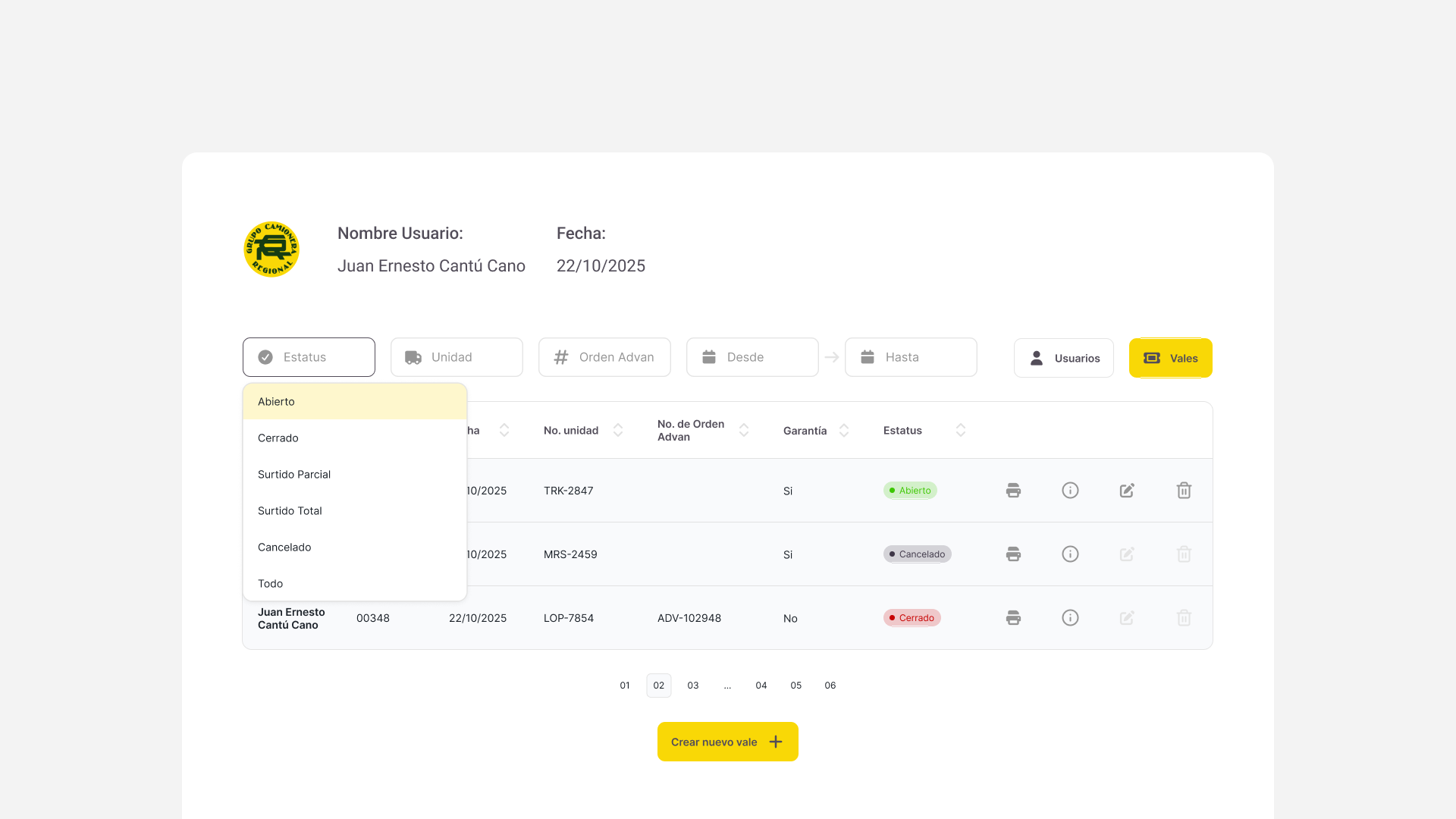
The interface design focused on supporting daily operational tasks with clarity and efficiency. Screens were designed to reflect role-based responsibilities, surface critical information at the right moment, and minimize cognitive load during high-frequency actions.
Rather than prioritizing visual complexity, the UI emphasizes structure, hierarchy, and usability, ensuring that system logic, statuses, and validations are clearly communicated through the interface.
• Information hierarchy based on operational priority
• Clear visibility of voucher status and next actions
• Role-specific layouts and available actions
• Visual feedback for validations, errors, and confirmations
• Print-ready voucher views for operational use
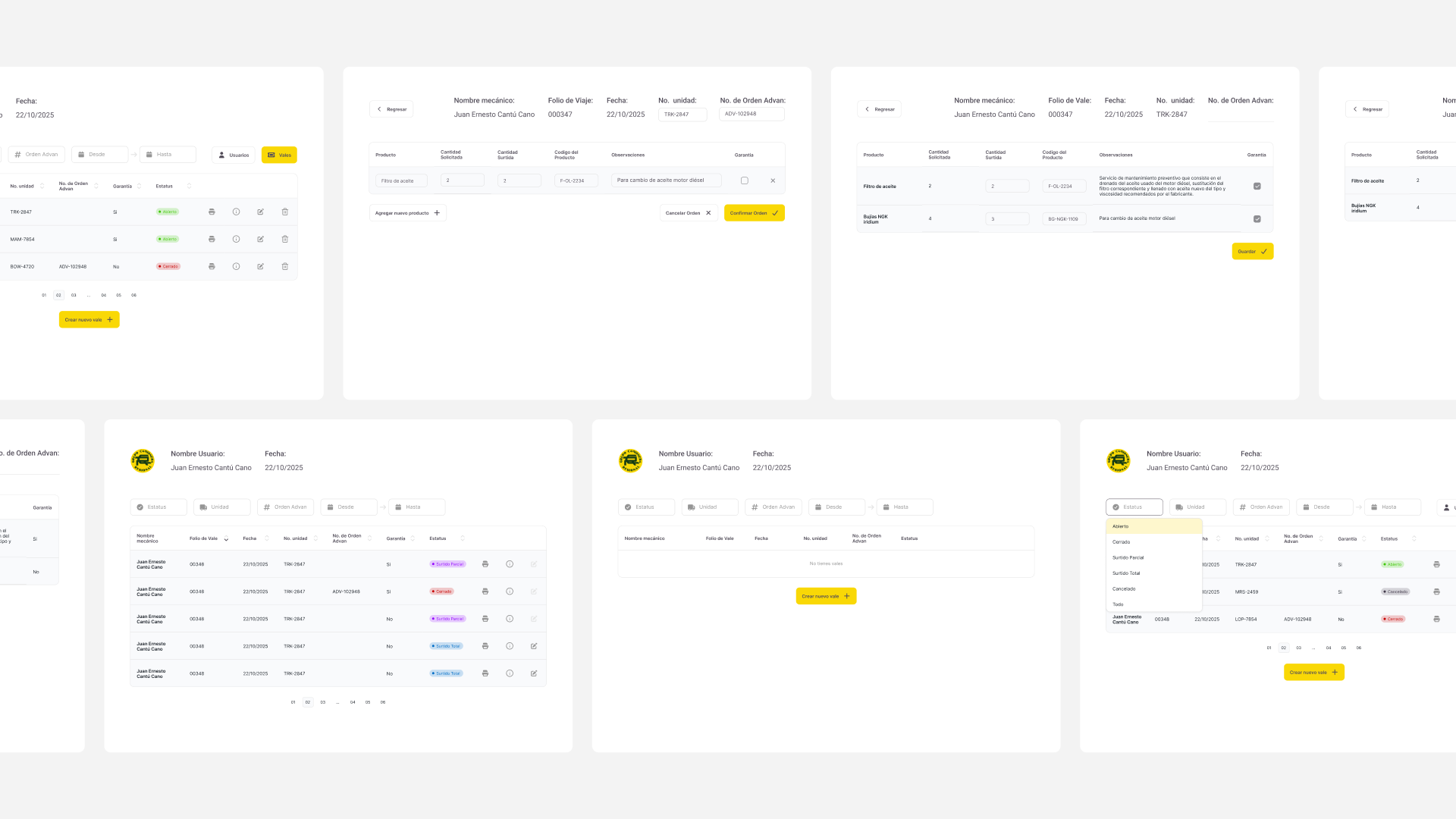

This project resulted in a structured internal voucher management system designed to support real operational complexity across multiple roles.
By defining end-to-end flows, status-driven logic, and role-based interactions, the system provides clearer control, reduces operational risk, and establishes a scalable foundation for future improvements.
• A unified and traceable voucher lifecycle across teams
• Clear role ownership and responsibility definition
• Reduced dependency on manual checks and informal coordination
• Status-driven logic that prevents invalid operations
• Scalable system structure ready for future reporting and optimization
This project reinforced the importance of designing internal systems around operational reality rather than idealized user journeys. Working with a defined scope and clear requirements highlighted the value of system thinking, rule definition, and clarity over complexity.